|
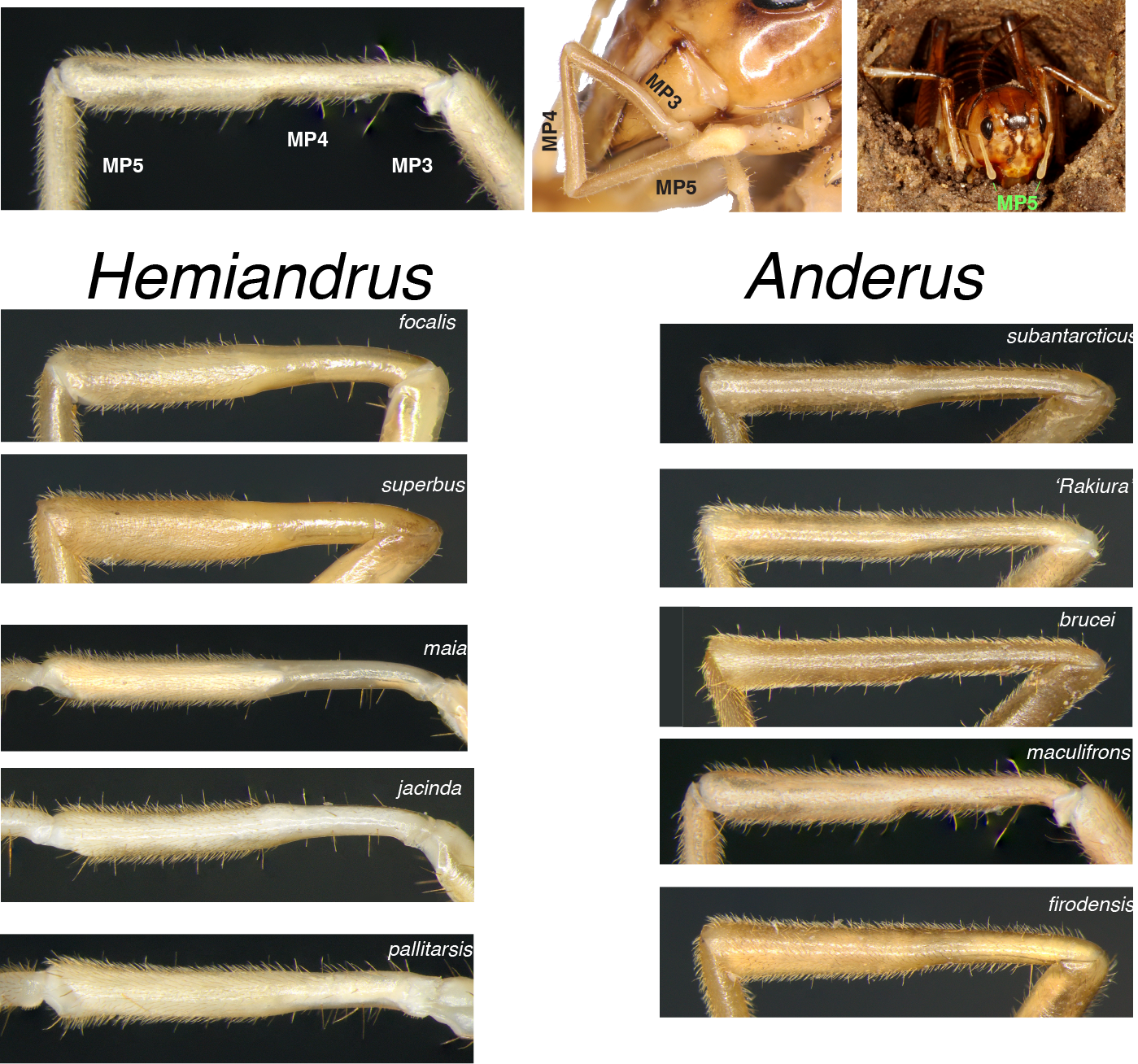
Until recently, all ground wētā were classified in the genus Hemiandrus. They are now (Trewick et al. 2024) divided into two genera that are not phylogenetic sisters; each is more closely related to separate lineages found outside Aotearoa New Zealand. Some Anostostomatidae species in Australia are superficially similar to some New Zealand species but belong to a separate lineage that has yet to be formally described. All species hide in burrows in the ground during the day usually closing the entrance with soil. During the night ground wētā emerge to forage on plants and invertebrates. Ground wētā do not have ears like those of tree wētā on their forelegs, but they do use vibration signals to communicate. Hemiandrus or Anderus? All species of Anderus have females with long ovipositors, but Hemiandrus includes species that have long, medium or very short ovipositors. However, the two genera can be distinguished with the aid of a magnifying lens by examining the maxillary palps.
|
|||||||||||||||||||
 |

 |
Last updated on November 15, 2024 |  |